
Innovative Air Gauge Technology Guarantees Maximum Precision
Injection technology is a key component of modern large engines. The Swiss company DUAP AG has played a major role in advancing this challenging technology. To ensure the high quality and precision of its products, DUAP relies on the outstanding internal grinding capabilities of a KELLENBERGER VM1000, combined with highly accurate air gauge measurement.
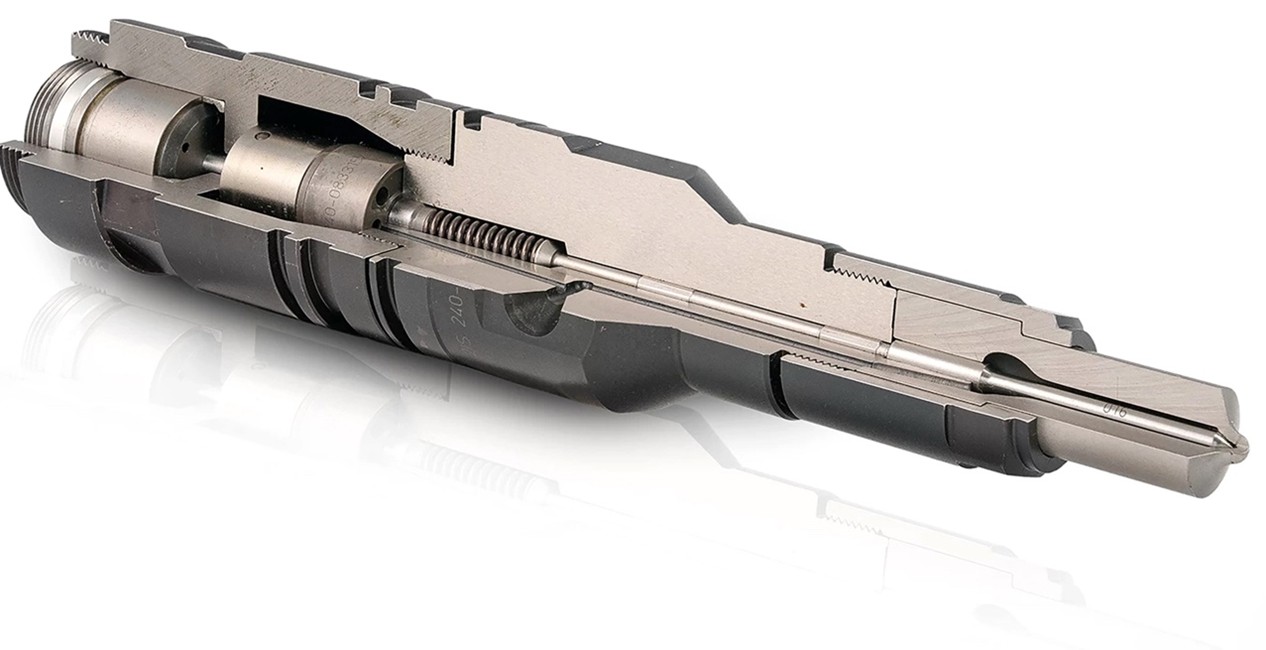
DUAP AG began its success story in 1943 with the development and production of deep-hole drilling, rotary transfer and end-machining machinery, as well as fuel injection systems, initially primarily for customers in the shipbuilding and power generation industries. Today, DUAP focuses mainly on the development and manufacture of injection systems for large engines running on both liquid and gaseous fuels. These systems are used worldwide in a wide range of power and application areas, including marine propulsion, power generation, and traction applications.
Core expertise in soft machining, heat treatment, and hard machining ensures a vertical integration rate 95 percent and provides the basis for its high-performance contract manufacturing operations, which form an integral part of the DUAP’s production concept. Production takes place exclusively at the Herzogenbuchsee site, where over 90 of the company’s 140 employees are based, while the sales network is international in scope.
DUAP’s continuous development of injection technology plays a key role in meeting increasingly stringent emissions regulations while simultaneously improving the efficiency and service life of large combustion engines. “Our latest developments focus on injection systems for alternative fuels such as methanol, ammonia, and hydrogen, as well as dual-fuel applications. We are an international innovation leader in this field,” says Matthias Scheurer, who has accumulated extensive experience during his 26 years with DUAP. For the past five years he has served as project manager for process engineering, overseeing evaluations and process optimization as well as equipment procurement. In addition to his professional responsibilities, he also passes on his accumulated knowledge to future production specialists and mechanical engineers as an instructor in production engineering at the Technical College in Bern, Switzerland.
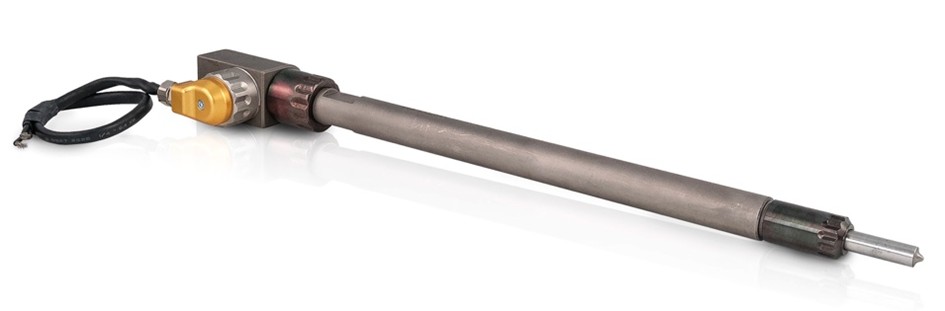
DUAP common-rail diesel fuel injector for igniting challenging gaseous and alternative fuels
Scheurer is thoroughly familiar with the many challenges involved in manufacturing components for fuel injection systems, such as nozzle bodies, valve seats and guide bores. Grinding small and ultra-small diameters is one of the most demanding machining processes. Factors such as surface finish and dimensional accuracy have a direct impact on the subsequent performance of an engine. Even minor geometric or surface defects can negatively affect sealing, injection pressure, and the spray pattern, ultimately impacting fuel consumption and emissions.
For this reason, only high-precision CNC grinding machines equipped with active thermal compensation, high-resolution linear scales, automatic dressing, and integrated measurement technology are used for such applications. These features are essential for ensuring economical series production at the highest quality level. Maximum machine rigidity and dynamic performance, high-precision guideways, backlash-free axes, and excellent thermal stability are fundamental prerequisites for machining even the smallest diameters with consistently high and repeatable quality.
To meet the numerous challenges associated with precision grinding,, the decision-makers at DUAP opted in 2025 to procure a KELLENBERGER VM1000 cylindrical grinding machine. The objective was to achieve the required accuracy in the micrometre range with a high degree of process reliability and repeatability.
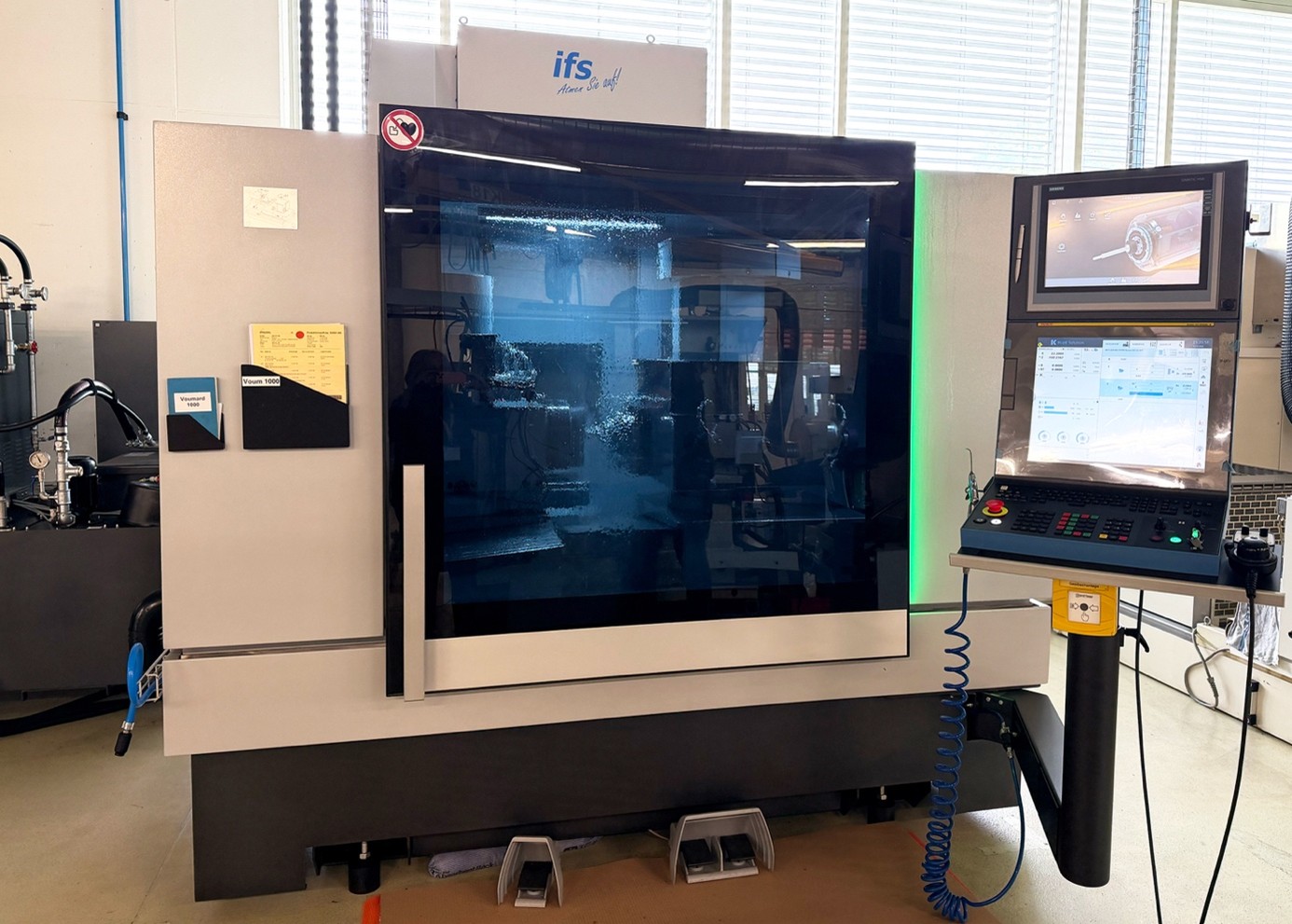
The acquisition of the KELLENBERGER VM1000 ensures that even the smallest diameters meet the highest precision requirements after machining at DUAP
VM1000 – High-precision grinding of even the smallest diameters with ease
The KELLENBERGER VM1000 is optimized for flexible, universal internal and external cylindrical grinding of complex workpieces up to 600 mm in length and with a swing diameter of 300 mm. The machine’s key strength is internal grinding, where it effortlessly grinds even the smallest diameters to the highest levels of accuracy.
The VM1000 is ideally suited for the demanding requirements at DUAP, as the company’s range of workpieces extends from the smallest individual components for engine fuel injection systems to ball bearing rings and gear boxes, as well as hydraulic components and complex parts for machine tool manufacturing.
The VM1000 features hydrostatic guides on all axes. These highly dynamic linear axes are equipped with specially developed KELLENBERGER HYDROLIN® guides, which are backlash-free and enable positioning accuracy in the nanometre range. This allows workpieces to be ground with extremely high repeatability and precision throughout the entire service life of the machine, while maintaining high machine availability.
Particular highlights are the machine’s two highly precise hydrostatic B-axes: the B1 axis with spindle turret and the B2 axis with table turret. Both axes also perform all the necessary movements for the dressing and measuring equipment. The spindle turret on the B1 axis is equipped with an exceptionally compact grinding head featuring a flexible spindle arrangement for up to four grinding spindles. This allows optimal positioning of spindles and measuring sensors, enabling the machining of just about every workpiece geometry as well as multiple internal and external grinding operations in a single setup.
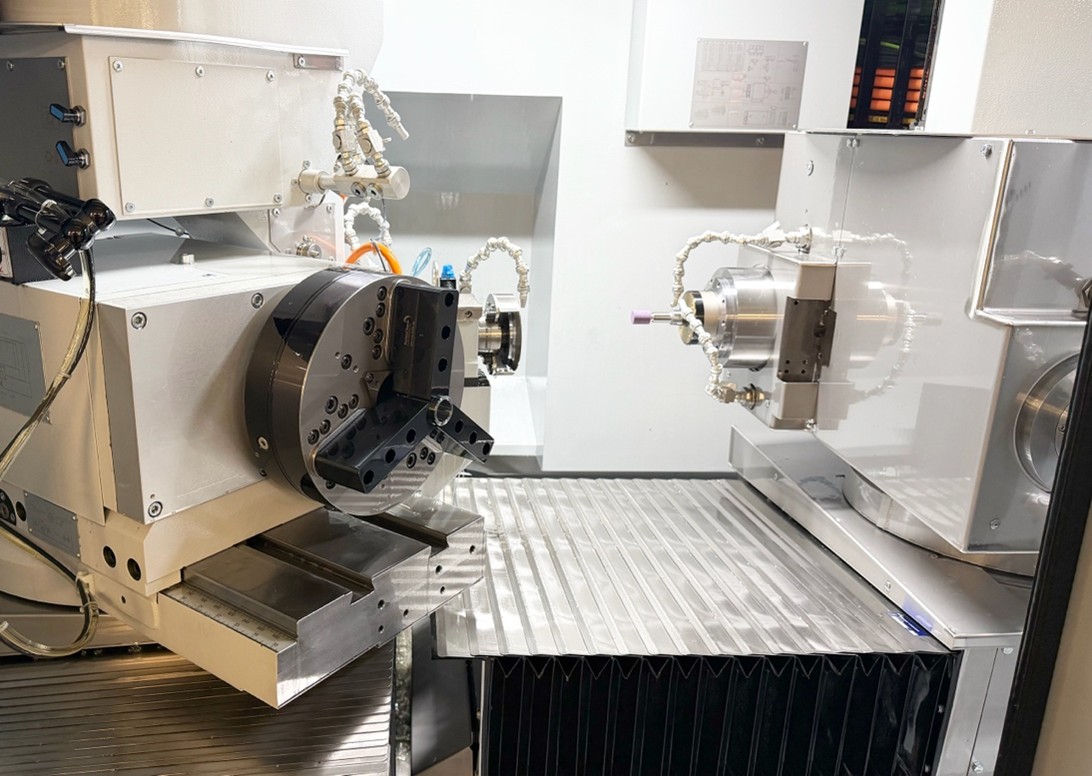
The traversing X-axis and swivelling B2-axis provide optimum accessibility for measuring the internal diameter. Measuring bores with diameters of just a few millimeters presents particularly demanding requirements for in-process and post-process measurement systems. Since in-process measurement during grinding is not possible with extremely small internal diameters, an alternative solution had to be found.
KELLENBERGER therefore focused not only on the internal grinding itself but also optimized the process by integrating an air gauge measuring system. Air gauging is considered the most accurate and economically viable method for measuring internal bores. However, this technology had never been integrated into a cylindrical grinding machine before.
Patrick Zünd, who is responsible for special solutions at KELLENBERGER, brought in external measurement expertise to find the right solution to this challenge. “Customer satisfaction is always our top priority,” says Patrick Zünd. “That is why we always work with the best specialists in their respective fields.”
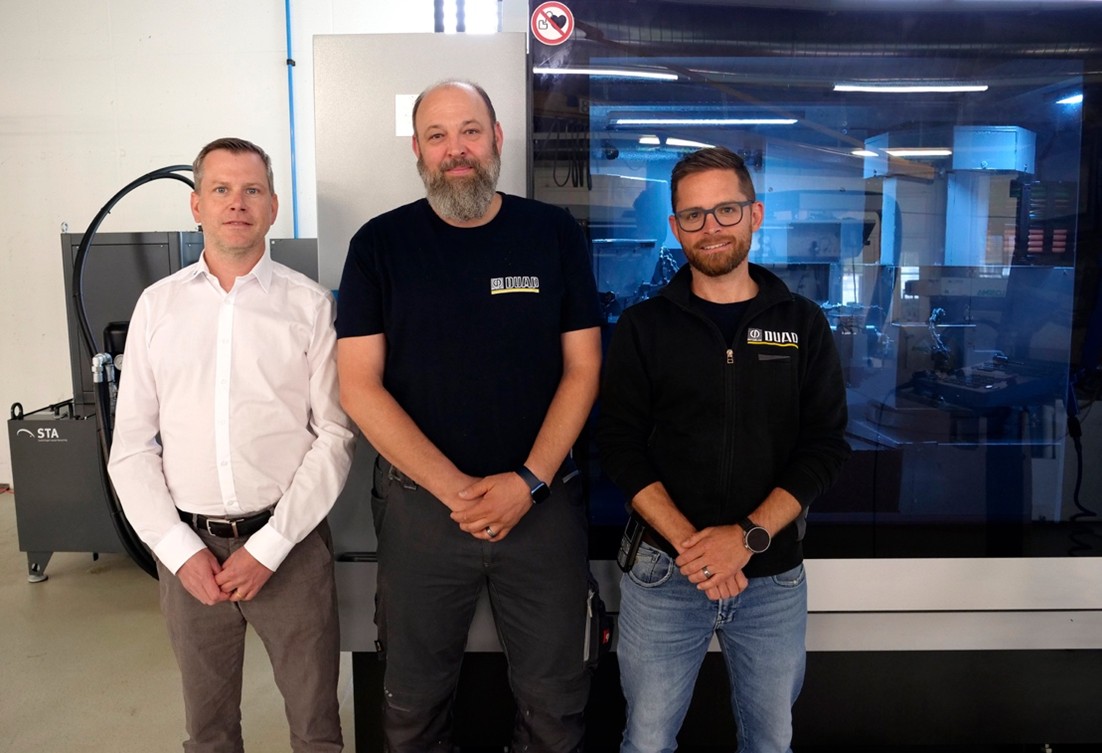
For Patrick Zünd, KELLENBERGER specialist for customized applications, and DUAP’s Björn Fehlbaum and Matthias Scheurer, the mission of achieving the required measurement accuracy has been more than successfully accomplishe
Air gauging does not rely on mechanical contact with the bore. Instead, it uses the resistance that the bore wall creates against a defined flow of air. This is a major advantage, particularly when measuring internal diameters of just a few millimeters, as no measuring forces are exerted on the workpiece. The air probe has an outside diameter that closely corresponds to the nominal bore diameter. Small nozzles are arranged radially around the measuring section of the mandrel. Air is directed through these nozzles into the bore, and the measuring system detects the resulting back pressure or air flow rate. This measured value has a previously calibrated relationship with the actual bore diameter. When the air gauge is combined with
automatic tool-wear compensation, extremely high dimensional accuracy can be ensured over long production runs.
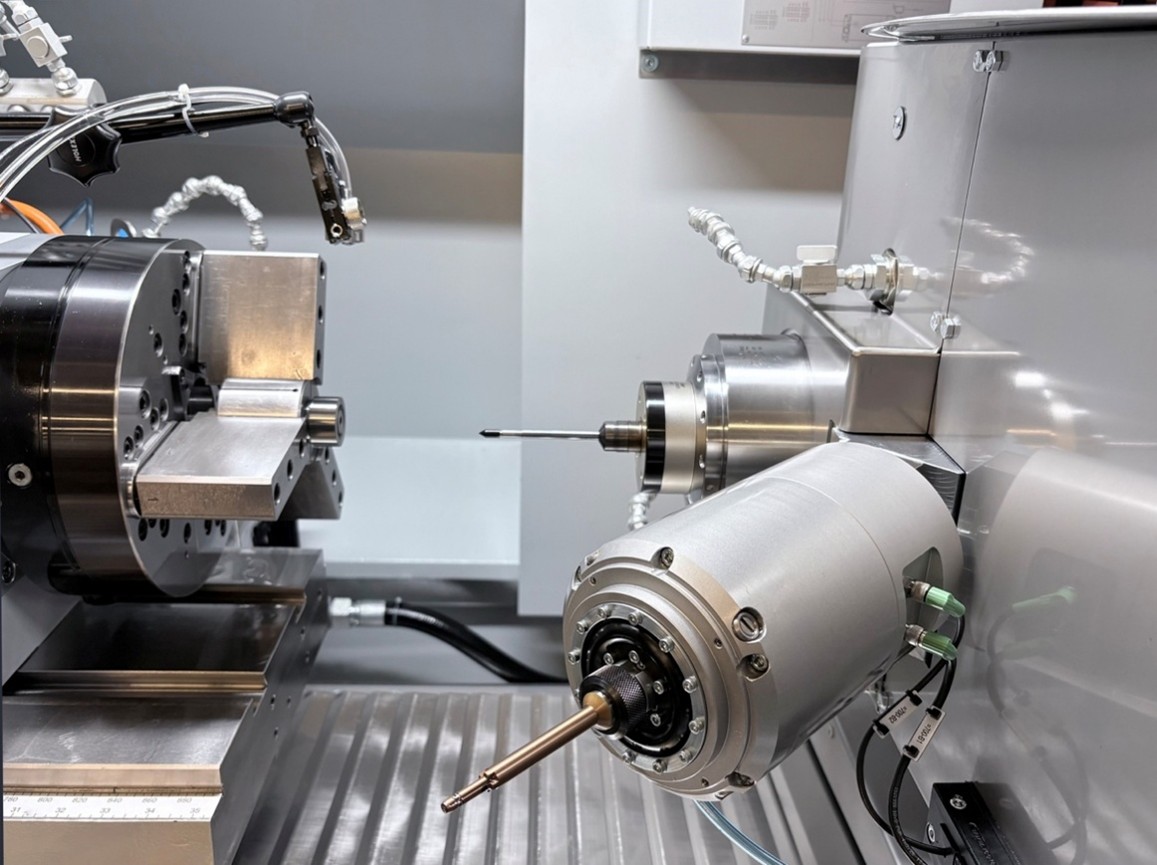
High-quality pneumatic measurement systems can achieve repeatability of less than 0.2 µm
Initial skepticism gives way to complete confidence
“At the beginning, we were a little skeptical as to whether the results would be as good as calculated,” says Matthias Scheurer. “But everything worked exactly as expected.”
Scheurer is nevertheless convinced that the expertise of DUAP’s internal grinding department was a key factor in the smooth implementation of the application. “Without the expertise of our internal grinding team, the application certainly would not have gone so smoothly. There is the technical side, but there is also what I would call a certain feel for the process. In this respect, Björn Fehlbaum, head of our grinding department and with the company for 15 years, is a real ‘grinding machine whisperer.’”
Today, after almost a year of experience with the VM1000, Scheurer’s overall assessment is consistently positive, and not just in this area. “Our cooperation with the KELLENBERGER
team has been very good overall. The training we received from Andreas Petrassi, who is a highly competent training manager, helped us make tremendous progress. We can say nothing but good things about the service as well. A minor service issue that occurred right at the beginning was resolved quickly and without any hassle. At the moment, we are operating the machine on a single shift. We’re currently operating on a single shift. With the acquisition of the VM1000, we’ve moved closer to our goal of running more shifts, including a ghost shift.”
The integration of the air gauge mandrel provides an additional benefit: should DUAP decide to automate the VM1000 at some point in the future, no additional measuring system would be required.
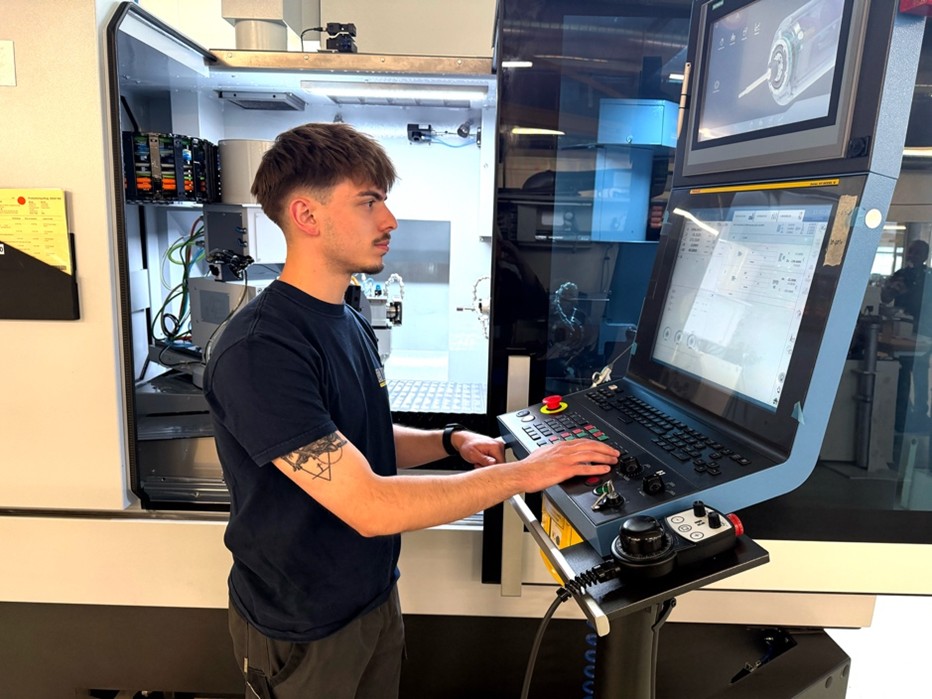
Machine operator Mite Jovanov appreciates the user-friendly BLUE Solution software